
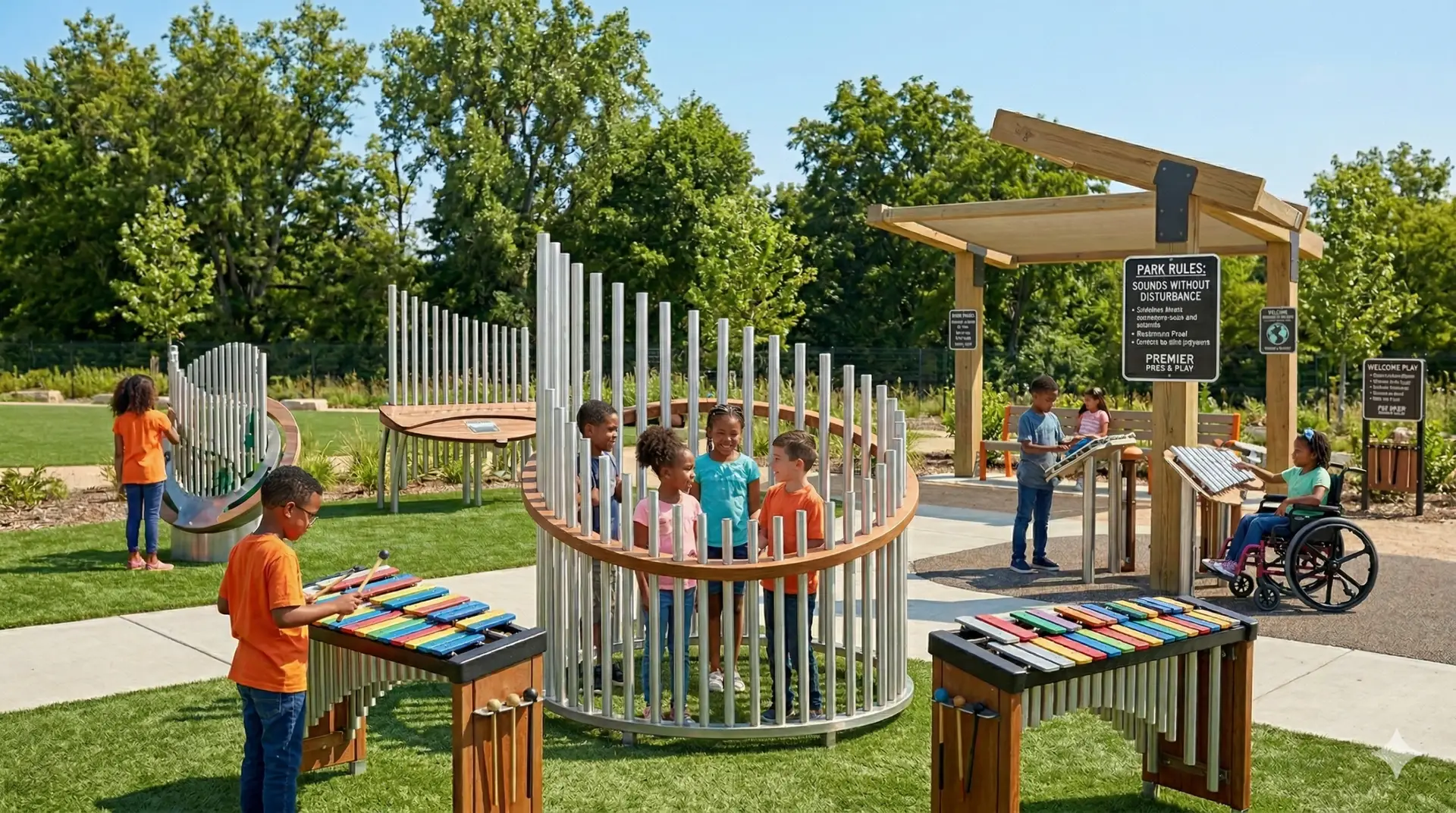
There is a specific kind of magic that happens when a child strikes a chime in the open air. The sound doesn’t just sit in the ear; it floats on the breeze, vibrating through the sunlight and inviting anyone nearby to join the chorus. A playground should be more than just a place to move, it should be a place to create.
Integrating musical instruments into outdoor spaces transforms a standard park into a living stage. Unlike traditional play equipment, music offers a “no-fail” environment. There is no right way to climb a melody or a wrong way to slide through a scale. It is a universal language that bridges the gap between generations, allowing a toddler and a grandparent to compose a spontaneous masterpiece together. When we introduce the resonant, sculptural beauty of music equipment into a landscape, we aren’t just adding “toys”, we are cultivating a garden of sound.
To ensure your outdoor symphony hits the right notes, here are five key elements to consider for a successful installation:
1. The Art of Placement: Creating the Ensemble
Think of your instruments not as soloists, but as members of an orchestra. Arranging equipment in a circular or inward-facing formation naturally encourages social connection. When players can see one another’s expressions, the “noise” becomes a conversation. This “Symphony in the Park” layout turns a solitary activity into a collaborative community event.
The Conductor’s Note: When instruments face each other, hearts usually do, too.
2. Sightlines and Scale: Designing for Impact
Visual harmony is just as important as auditory harmony. Installing instruments by size – placing larger, more statuesque pieces toward the back and smaller ones in the foreground – creates an inviting, tiered aesthetic. This ensures that the space remains sight-accessible for everyone, allowing the smallest musicians to see the “conductor” and feel part of the larger group.
The Conductor’s Note: A great view ensures that no one misses their cue.
3. Gentle Resonance: Sound without Disturbance
A common concern for urban parks or schoolyards is the “volume” of play. True musical instruments are designed to be “quiet yet engaging.” Ideally, the output should be no louder than a distant lawnmower, delightful to those playing, but a gentle ambient hum to those a few yards away. This allows for a rich auditory experience that respects the peace of the surrounding neighborhood.
The Conductor’s Note: The best songs are the ones that whisper to the neighbors rather than shout.
4. Inclusive by Design: Music for Every Body
The true beauty of music is its accessibility. To create a truly inclusive space, ensure instruments are installed at varying heights and angles to accommodate musicians in wheelchairs or those with limited mobility. Beyond the equipment itself, consider the “turnaround” space; providing clear, paved paths and wide berths ensures that the joy of rhythm is never blocked by a physical barrier.
The Conductor’s Note: In the garden of sound, there are no fences – only open gates.
5. Resilience in the Elements: Built for the Seasons
The great outdoors is a demanding stage. To keep the music playing year-round, instruments must be crafted from weather-proof materials like high-density polymers and stainless steel. From heavy-duty cable lacing on chimes to UV-resistant coatings, choosing equipment built for durability ensures that the scorching sun or winter snow won’t silence your park’s song.
The Conductor’s Note: True talent doesn’t mind a little rain on the opening night.
By blending the structure of a playground with the soul of a concert hall, we do more than just build parks, we build culture. Premier Park & Play invites you to look at your next project not just as a plot of land, but as a blank sheet of music, waiting for the first note to be played!